Mangrove Resource Management
2011.8~
A village that has continued to plant mangrove trees mainly by its residents is now revitalizing the community by using the plantation land. We will consider how to build a relationship between human society and mangroves to meet the needs of modern society.
Changes in the relationship between human society and mangroves
The intertidal zone is the area between the sea and the land, where the surface layer of the ocean is flooded and dries up as the tide rises and falls. Mangroves are the plants distributed in this intertidal zone.
In South Sulawesi, Indonesia, where shrimp and seaweed cultivation is thriving, many mangroves have been cut down and converted into aquaculture ponds in the intertidal zone. The mangroves are not only important for the marine ecosystem, but also serve as a breakwater for the coastline, so the destruction of the mangrove ecosystem has gradually had various negative effects on human society.
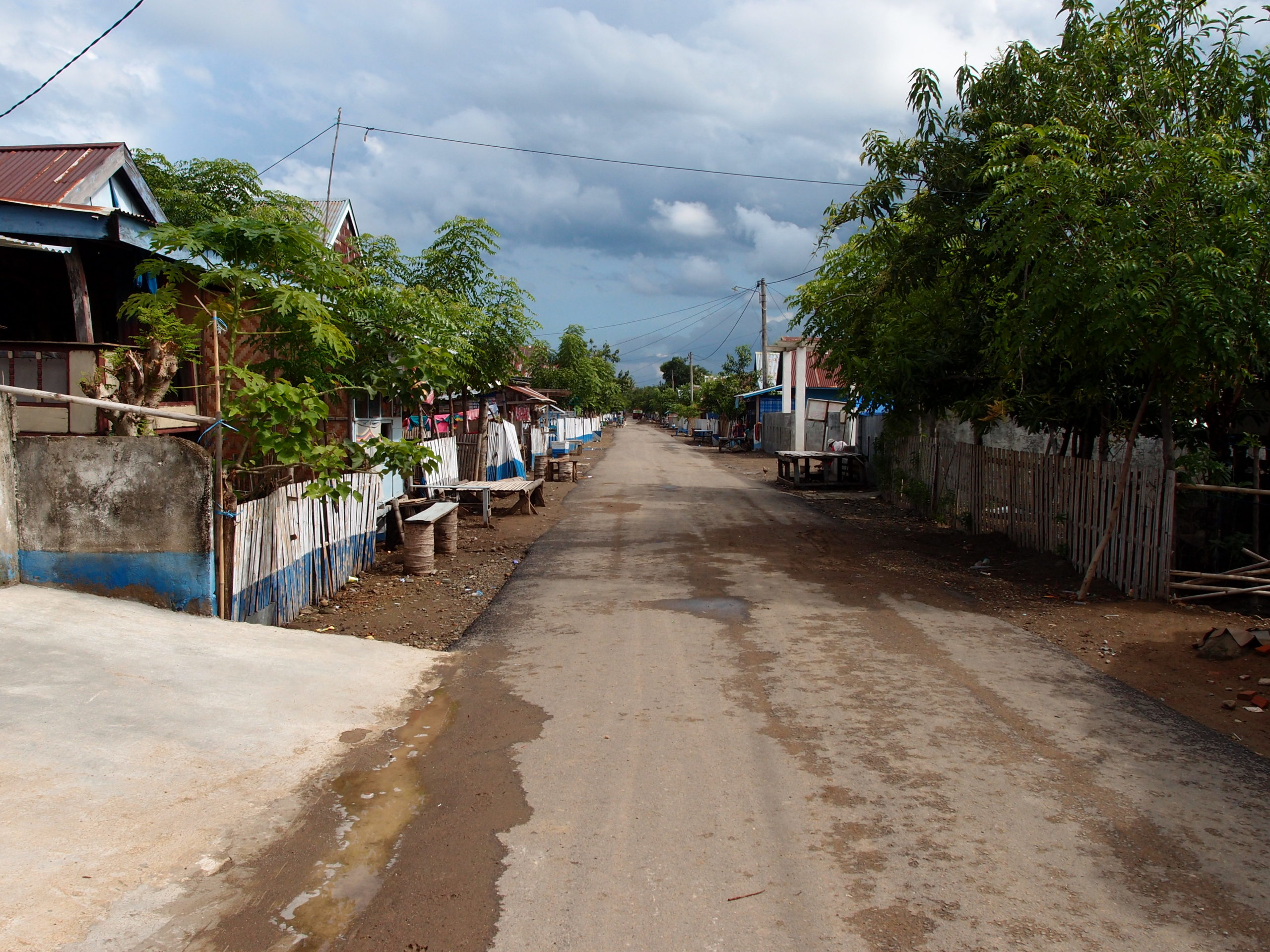
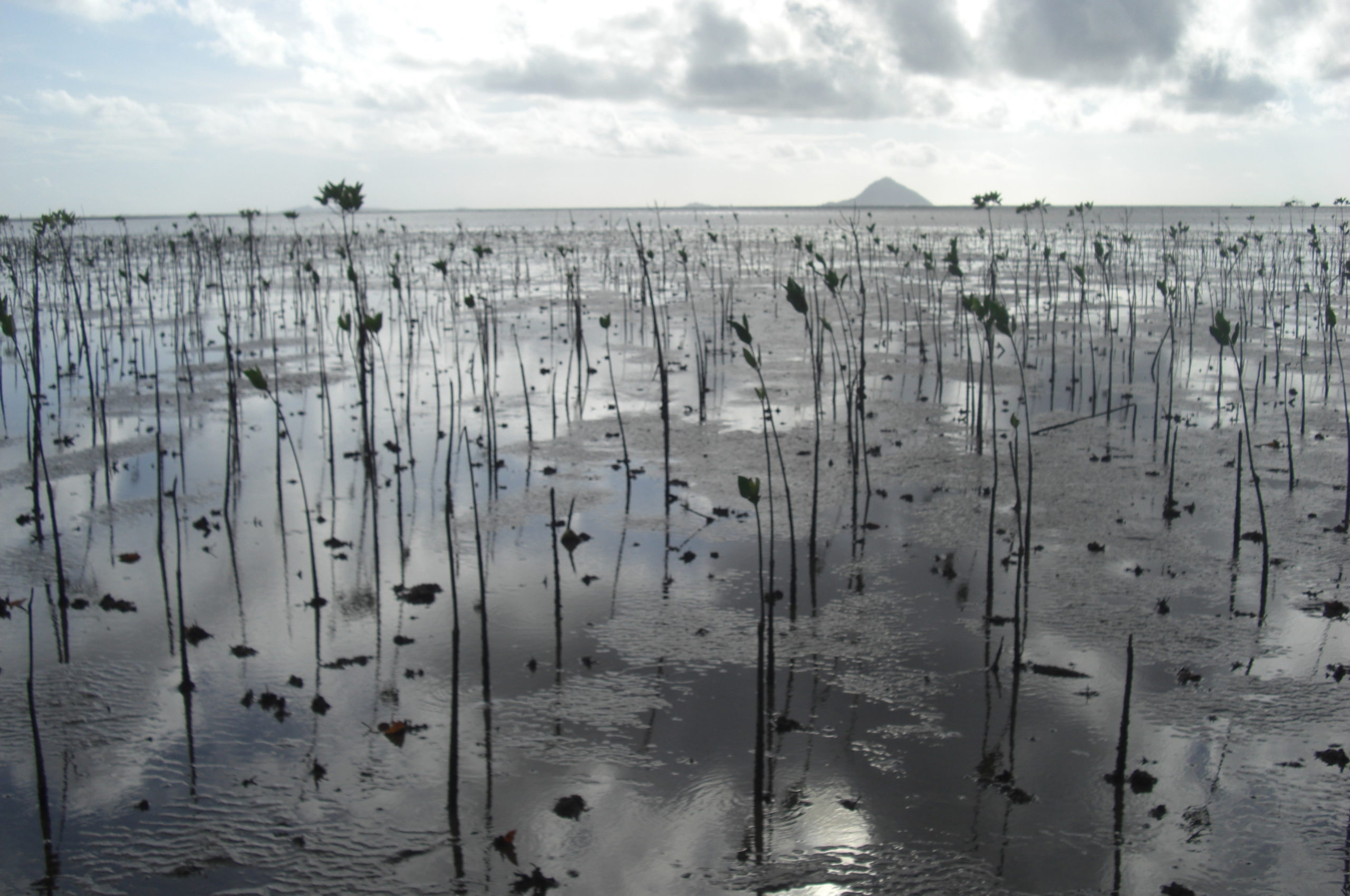
In the village of Thongke Thongke, Sinjay District, facing Boneh Bay, the damage caused by coastal erosion extended to the residential area of the village, and in order to protect the living area, breakwaters were built using stones and coral reefs, but this did not work. In the 1980s, the village began planting embryonic mangrove seeds along the coastline.
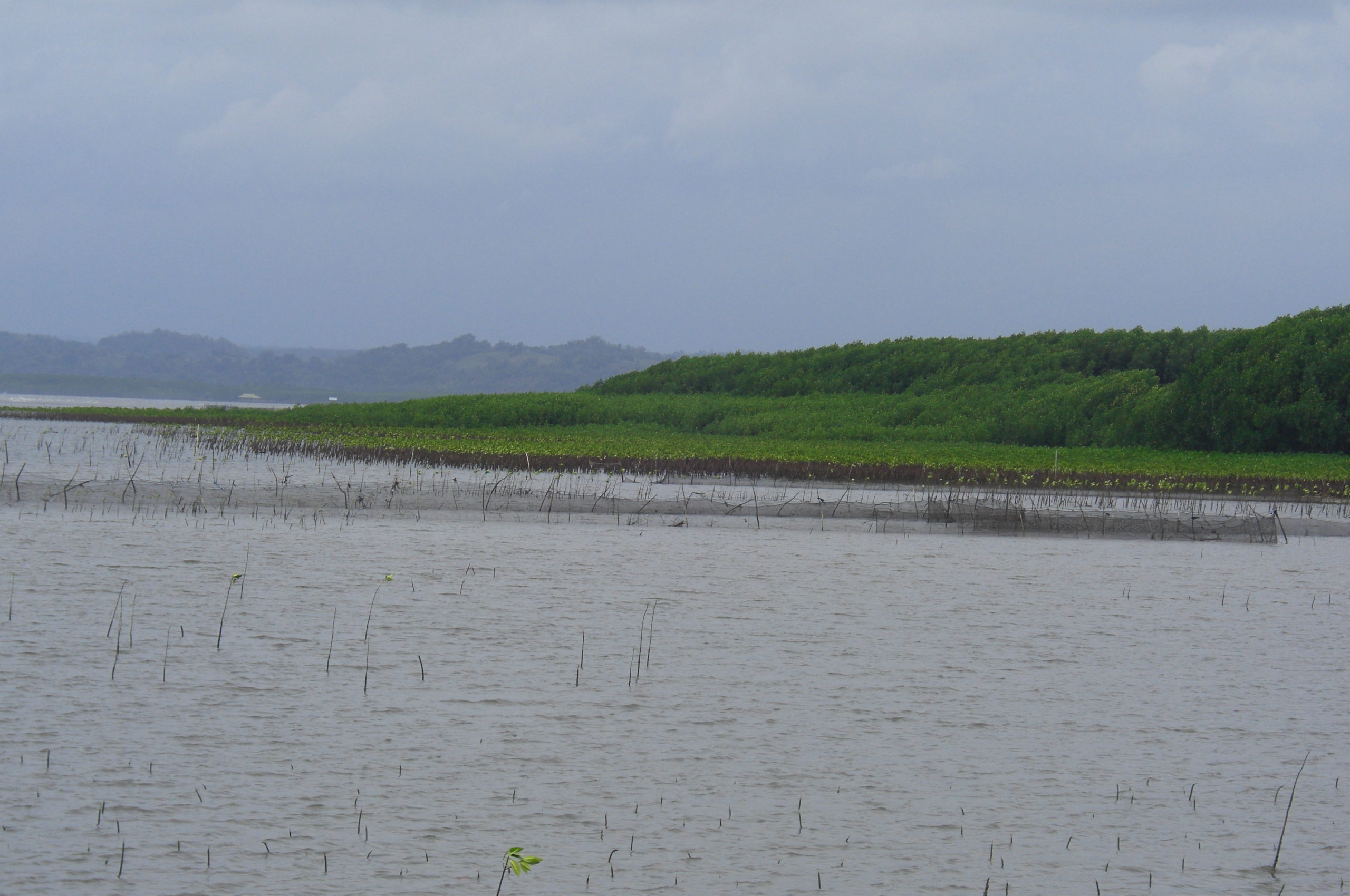
Initially, only a few people were involved in the project, and a few years later, the village organized itself to continue the planting activities, and has now created a 100-ha mangrove forest on the border between the village and the sea. The effect of this mangrove plantation is not only protection from coastal erosion, but also a reduction in the salinity of the groundwater, making it easier to secure water for domestic use.
At the time, successful cases of community-based mangrove planting were rare, and the project attracted a great deal of attention due to the environmental protection boom. As many government agencies, NGOs, and researchers from Japan and abroad visited the village, the mangroves became an iconic feature of the village.
However, this led to the emergence of a major faction within the group that had been steadily working on the project.
Who owns the mangroves ? A model for conservation and utilization of forest plantations as a new form of coexistence between mangroves and human society
Furthermore, in 1990, the Indonesian government enacted a forest law that prohibited unauthorized logging, including mangroves that had been planted by the residents. This is a bit of a departure from the residents’ intentions.
The waters of Indonesia are open space. However, mangroves become land at low tide and sink into the sea at high tide, making the boundary between land and sea ambiguous. In addition, mangroves are plants with large roots that accumulate sand and mud carried by currents that change with the tide, changing not only the biota inhabiting them but also the environment of the coastline.
The villagers who had planted the mangroves were thinking of reclaiming the mangrove plantations in the future and expanding the land area to create aquaculture ponds and residential areas. For this reason, the mangrove plantation area was being actively traded within the village. It can be said that this was one of the high motivating factors for the mangrove plantation activities. Who will own this ambiguous mangrove area that is neither land nor sea?
The residents insist that the mangroves they have planted are the property of the people who planted them. However, according to the Forest Law passed in 1990, they are not allowed to cut them down.
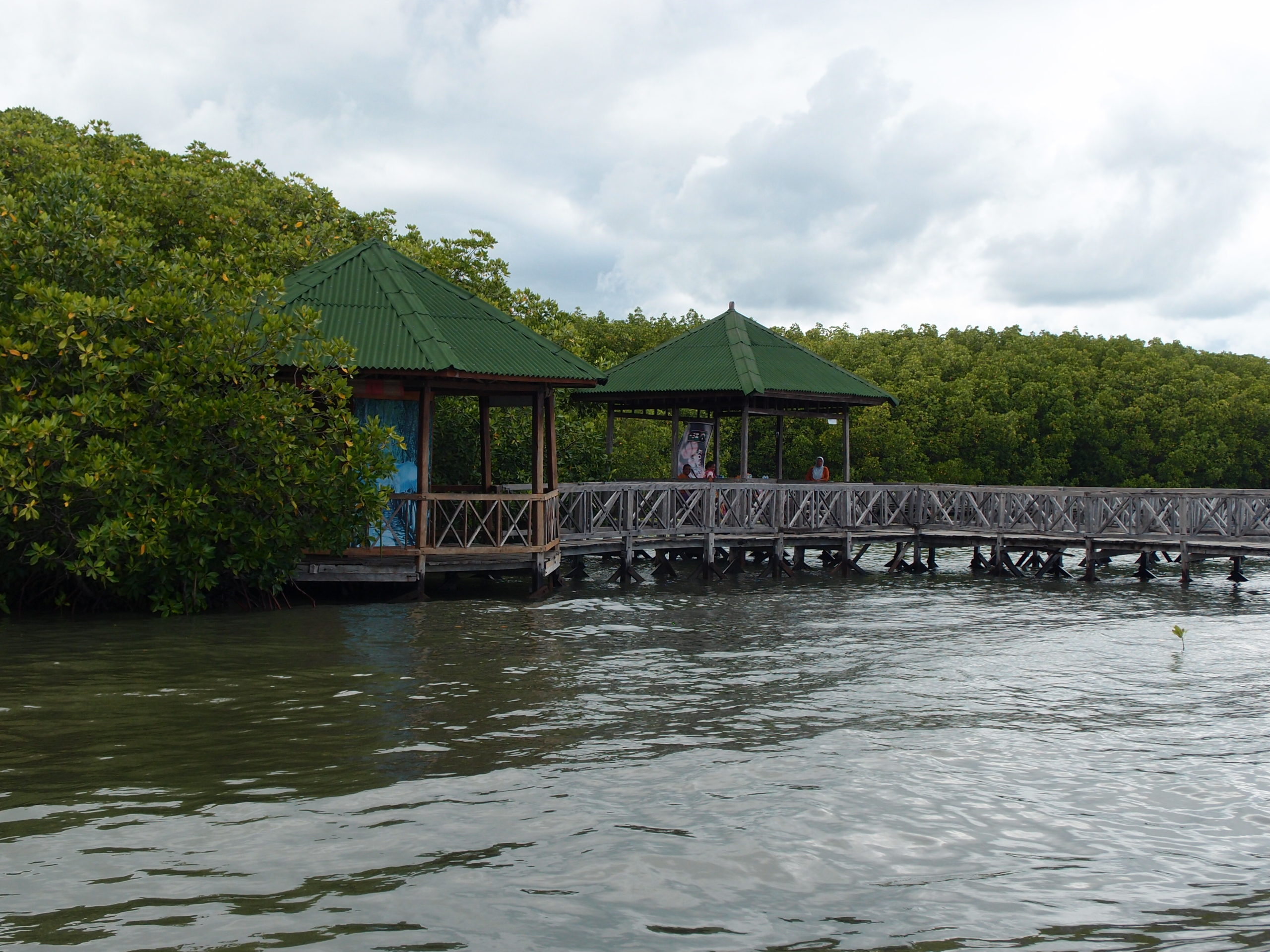
Currently, the village is looking for ways to utilize the mangroves without cutting them down. The Forest Department and the Tourism Department have invested a large budget, and under the government’s initiative, corridors and bungalows within the mangrove plantation area have now been established. The village is located about 5 km from the center of Sinjay province and is a tourist destination, especially during holidays, and the number of visitors is increasing.
In recent years, the demand for green tourism has been increasing in Indonesia as more and more people become nature-oriented and the importance of environmental education is mentioned. Therefore, in collaboration with the Tourism Promotion Bureau of this region, we are working to propose new leisure activities in Indonesia using mangrove plantations, create new service industries, and foster local industries. In this project, we will explore the possibility of mangrove plantations becoming a model for conservation and utilization as a new form of coexistence between mangroves and human society.