Weaving Support Project
2020.2 ~
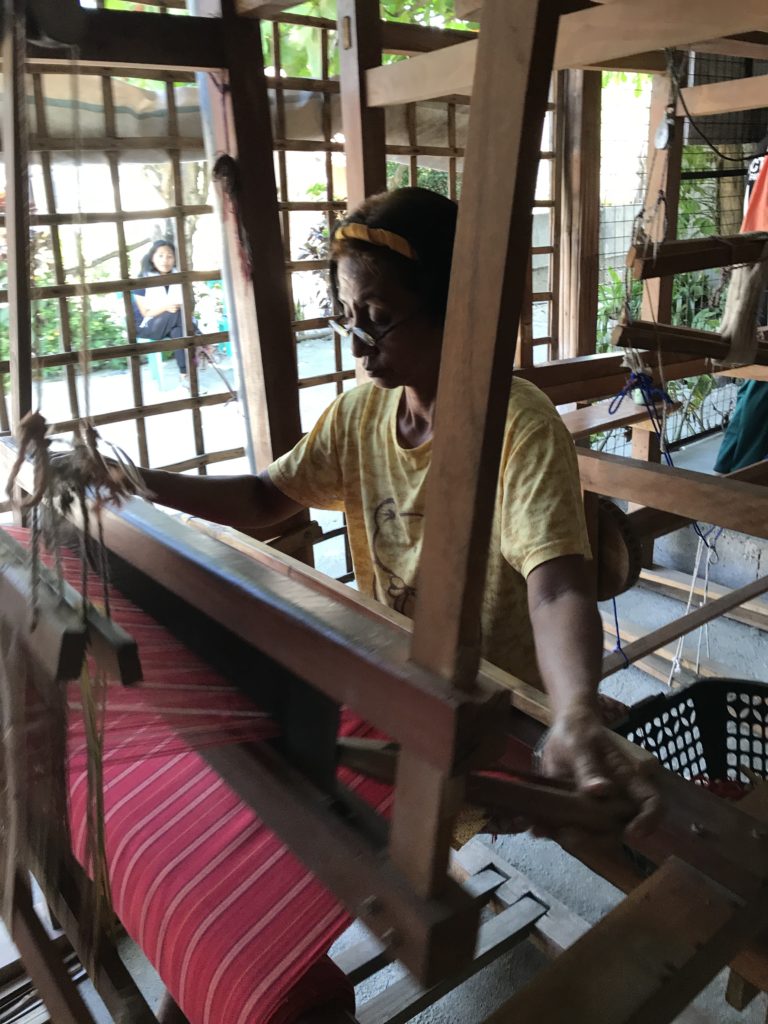
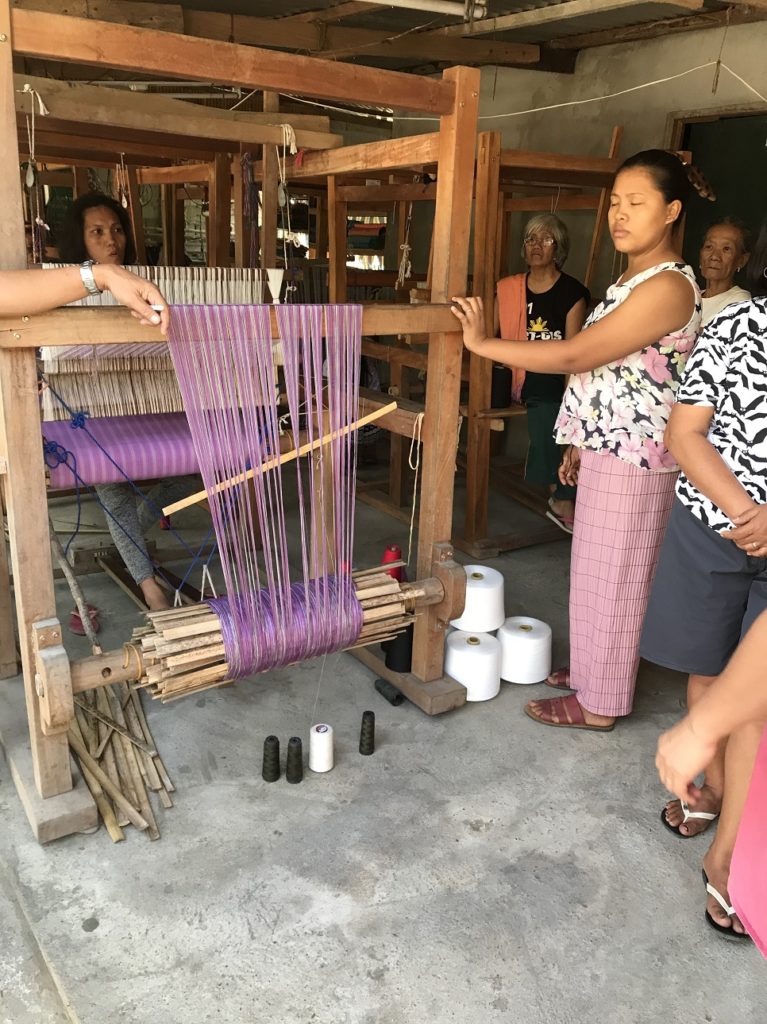
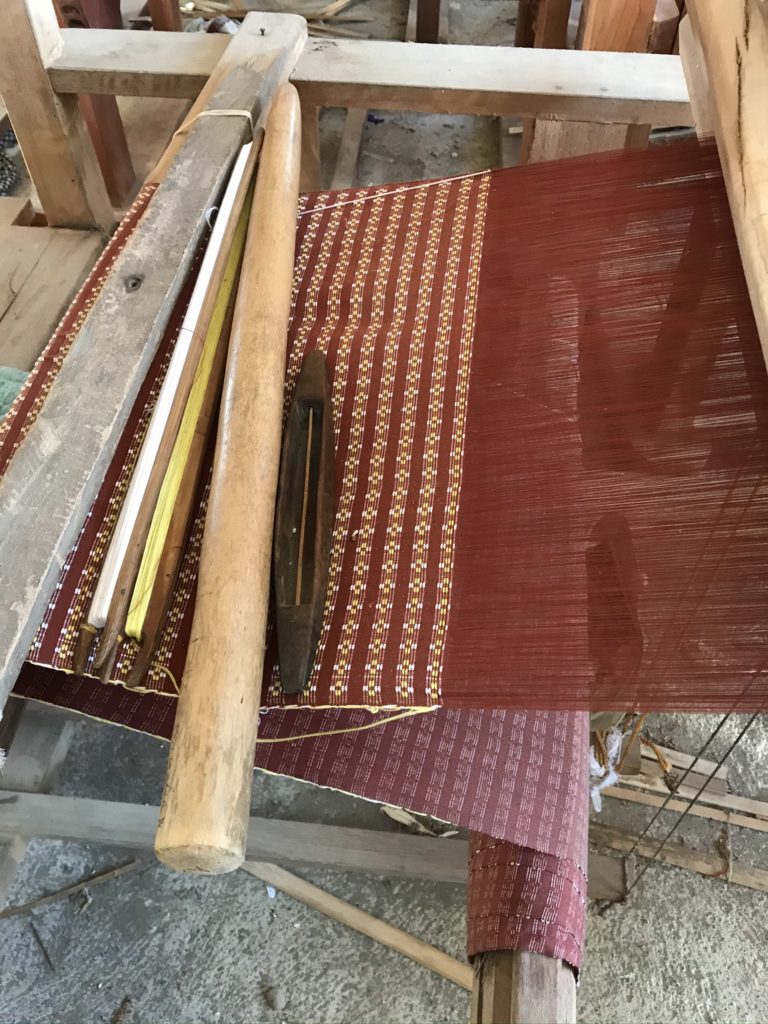
The women in the village of Abra weave by hand as a sideline to farming. The cloth they make is wonderful, but they lack appropriate sales channels and processing techniques to add value. Therefore, we are helping them to improve their processing skills and develop sales channels in Japan, so that they can generate more income and motivation.
Revival and Current Status of Traditional Textile Techniques in Abra
In the plains west of the Cordillera Mountains in the northwestern part of Luzon, including the province of Abra, the rainy season lasts six months and the dry season lasts six months. Traditional cotton cloths were made into bedding and clothing, and different patterns, colors, and textures were woven in each village.
In the 1970’s, however, women’s weaving in the villages gradually declined due to the introduction of cheaper foreign textile products. The cloth woven here is a simple plain weave with two warp threads going up and down.
In ancient times, clothing and bedding were woven using cotton threads from cotton grown by the people themselves.
Nowadays, they only weave plain weave, but in the past, they used a sophisticated weaving technique similar to Japanese fukuro-ori, where three-dimensional patterns emerge, but no one has that technique now.
After cotton cultivation was discontinued, the number of people who could teach hand weaving gradually decreased, but in the 1980s, Japan provided assistance for one year to revive the weaving techniques. However, in the 1980s, Japan provided a one-year assistance program to revive the weaving techniques, and gradually women began to work on weaving again. I can only speculate on the extent of Japanese influence at that time, but it seems that many of the fabrics of the Saranay Weavers’ Association have colors and patterns that remind me of Japanese tsumugi.
Traditional skills of the Tingyan mountain ethnic minority
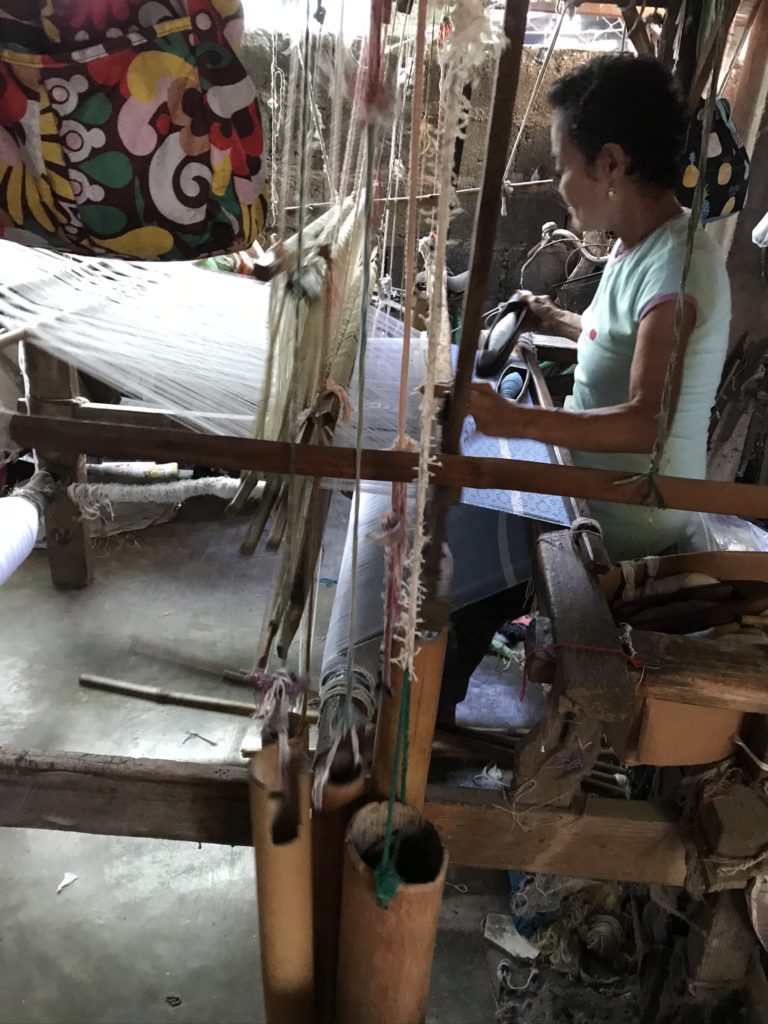
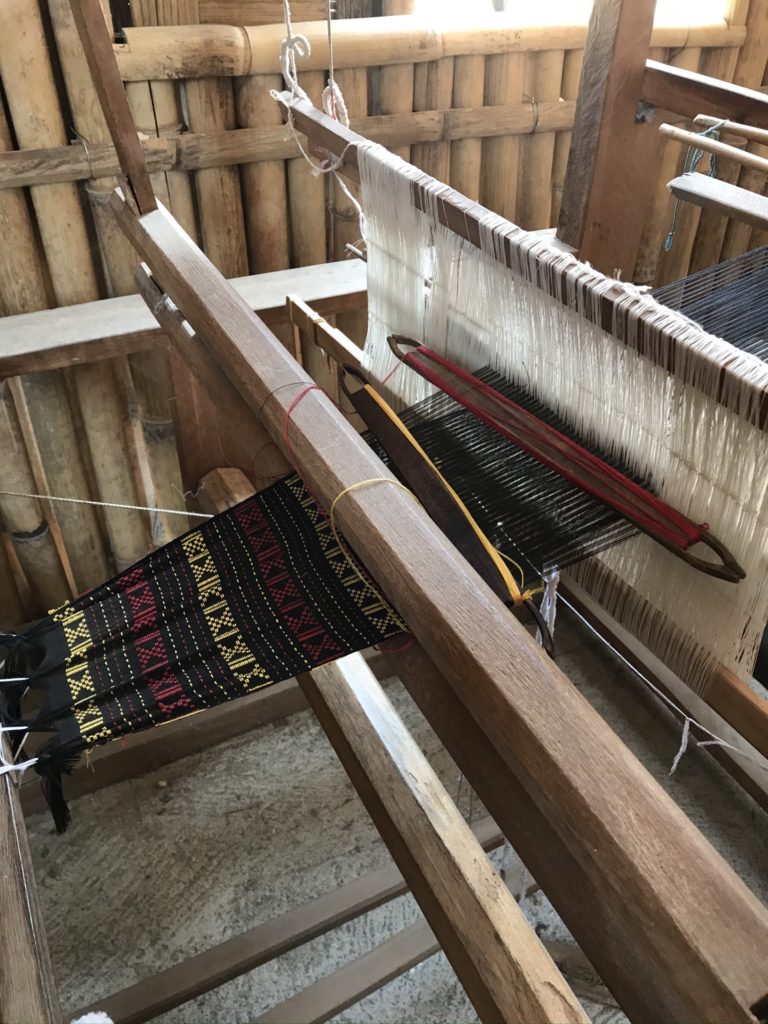
In the village of the Tingyan tribe, a mountainous minority tribe, they not only dye yarns and fabrics, but also weave from the dyed yarns. One old loom in a communal hut in the Tingyan village has been in use for a hundred years. There, they not only wove the fabric, but also processed it into various products such as jackets, ponchos, vests, and bags. The products were embroidered with the traditional patterns of the Tingyan people, giving them a unique texture. The traditional patterns consisted of geckos, medicinal herbs, and lucky flowers, which were embroidered with white bunched cotton thread borders.
The most skilled weavers in the Saranay Weavers’ Guild can use up to four shuttles, but the Tingyan can use as many as 25 shuttles to weave patterns, including figurative patterns such as buffaloes and people.
Other elaborate weaving techniques were also seen, such as weaving gold thread to bring out flower patterns and other elaborate designs. Traditionally, they were used as loincloths that also served as decorative sashes for men. Nowadays, they are used as large, colorful ornaments as sashes, i.e., a belt that hangs from one shoulder to the opposite hip or wrapped around the waist. The purchasers are no longer the Tinggans, but have changed to the wealthy of Baguio and Manila.
This high level of technology remained in the Tingyan villages because they continued to supply costumes not only for daily wear, but also for weddings and ceremonies. Even after the cultivation of cotton was discontinued, they continued to purchase yarn to make traditional costumes and maintain their advanced skills.
Revitalization of the traditional textile industry in Abra facilitated by empowerment through technology exchange
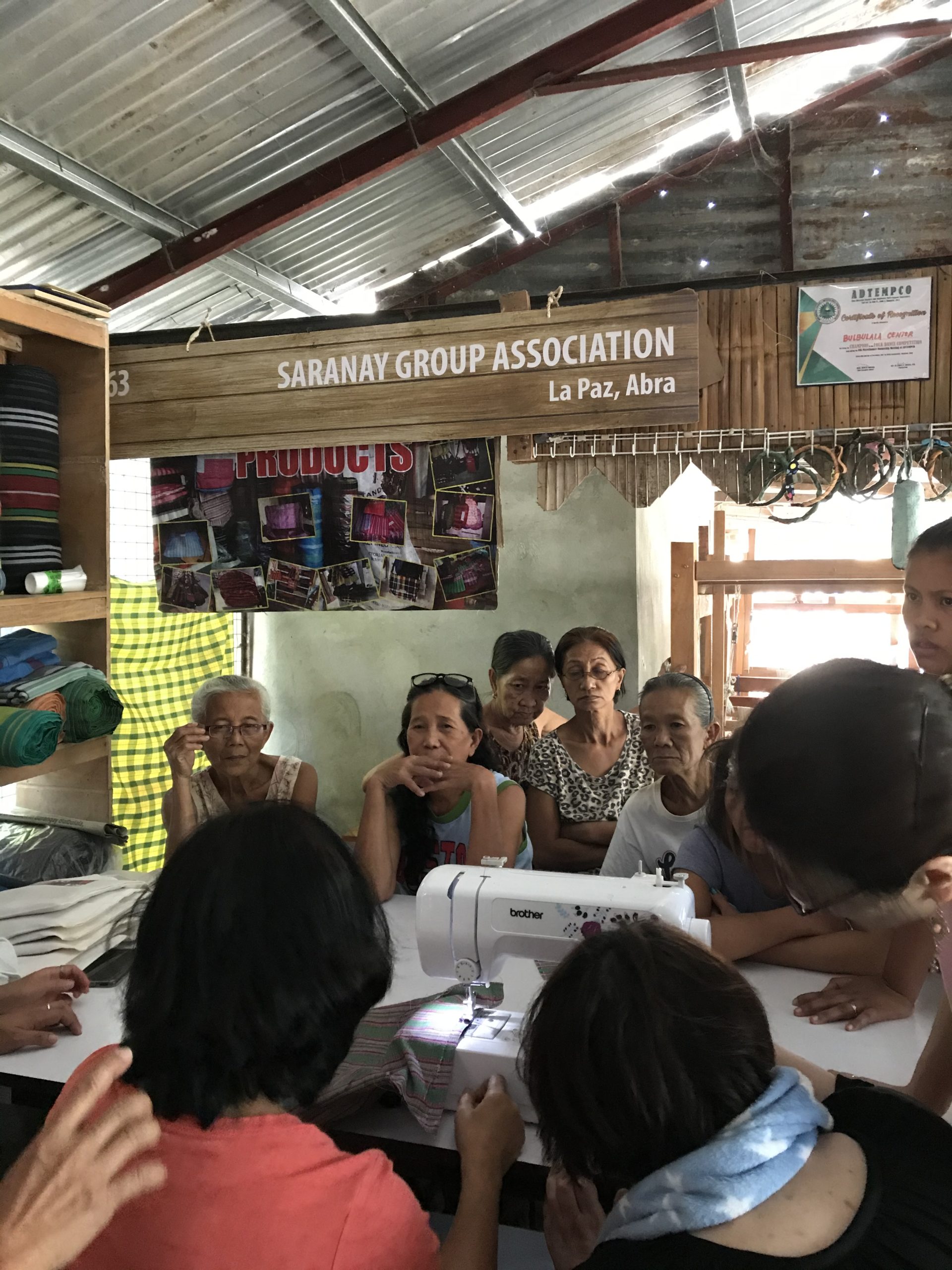
When we organized an exchange meeting between the Tingyan and the sewing groups in February 2020, 38 weaving, dyeing and sewing women participated. We hope that the women of the Saranay weaving cooperative will regain their advanced weaving skills by interacting with the Tingyan people. We are also hoping that the women of the Saranay weaving cooperative will be able to regain their advanced weaving skills by interacting with the Tingyan people, and by interacting with another local sewing group, we hope to increase the added value of their textiles by processing them into clothing. Therefore, if we are able to produce more advanced fabric products through their exchanges, we hope to be able to sell them not only locally but also in Japan.
Once everyone understood the process and meaning of the exchange, and felt closer to each other, we discussed how to make this exchange program more than just a friendship event. We agreed to empower each other not only through the relationship between the Philippines and Japan, but also through the exchange of women in Abra, such as the weaving cooperative in Lapaz and the sewing cooperative in Bucay, and the various weavers in Lapaz and Manabo. The participants agreed to empower each other through exchanges among women in Abra , such as between various weavers, and to develop these exchanges into social projects in the future. This was the most meaningful discussion on the livelihood of rural women.